Please enable JavaScript to access this page. Medicine And Fitness: exercise
Showing posts with label exercise. Show all posts

Exercise can boost teens' academic performance

Many teenagers are more interested in watching TV and playing video games than exercising. But new research has presented them with another reason to get active - regular moderate to vigorous exercise could boost their academic performance.
According to the Centers for Disease Control and Prevention (CDC), regular physical activity in childhood and adolescence has many significant benefits, including helping to build healthy bones and muscles, improving strength and endurance and increasing self-esteem.
But statistics from the CDC show that in 2011, only 29% of high school students participated in 60 minutes of physical activity a day - the amount of activity recommended by the US Department of Health and Human Services.
Researchers from the UK say that if their findings - published in the British Journal of Sports Medicine - are confirmed through further research, it could present significant implications for public health and education policy.
The research team analyzed a sample of 5,000 children who were a part of a Children of the 90s study.
The children, aged 11, were required to wear an accelerometer on an elasticated belt for a period of 3-7 days, in order for the researchers to monitor their daily duration and intensity of physical activity.

Implications for public health policy

Results from the accelerometer showed that on average, boys carried out 29 minutes of moderate to vigorous exercise each day, while girls carried out 18 minutes. The researchers note that this is significantly less than the 60 minutes of exercise each day recommended by health officials.
These results were then compared with the children's academic performance in English, mathematics and science in the compulsory national test key stage 1 at age 11, key stage 2 at age 13, and General Certificate of Secondary Education (GCSE) at ages 15/16.
The findings revealed that at age 11, higher levels of moderate to vigorous exercise correlated with better academic performance across all three subjects for both boys and girls.
Girls in particular demonstrated a significant improvement in science performance as a result of physical activity.
At age 13, better academic performance was also linked to increased physical activity.
At age 15/16, every additional 17 minutes of exercise a day for boys and 12 minutes for girls was linked to better examination results. Again, females demonstrated the highest benefit of exercise through their science results.
The researchers say that these results suggest that devoting more time to physical education benefits not only the health and well-being of teenagers, but also their academic attainment, encouraging the need for public health and education policy interventions.
They add:
"If MVPA (moderate-vigorous physical activity) does influence academic attainment, this has implications for public health and education policy by providing schools and parents with a potentially important 'stake' in meaningful and sustained increases in physical activity."
Furthermore, they note that although it could be a "chance finding" that increase in physical activity was linked to better science performance in females, this could also signify gender differences in the brain as a result of exercise.
However, they add that further research is required in order to confirm and understand this finding.
Earlier this year, Medical News Today reported on a study suggesting that current recommendations for children to exercise a minimum of 1 hour a day is not enough.

How To Get Fit With 3 Minutes Of Exercise A Week: BBC Doc Tries "HIT"


Man and woman on exercise bike
New research revealed on a BBC TV Horizon programme broadcast in February 2012, suggests it is possible to improve some measures of fitness with just 3 minutes of exercise a week. Medical journalist Dr Michael Mosley, like many people, is not a great fan of exercise for its own sake, and set out to find how little he would need to do to get fit. And he discovered some surprising facts about health benefits of HIT, or High Intensity Training.

Challenging Current Thinking

"It goes against everything I was taught in medical school, and everything I have ever read since", gasps Mosley to camera, as he completes a vigorous bout of pedalling on a stationary exercise bike while scientists look on.

Mosley, who trained as a medical doctor before moving into journalism and broadcasting, introduces the one-hour programme, "The Truth About Exercise", by saying that what he discovered about exercise, thanks to the latest research, has challenged his view, and altered the way he lives his life.

High Intensity Training

A main theme of the TV programme is High Intensity Training (HIT), where you do a number of shorts bursts of intense and effortful exercise with short recovery breaks in between. 

HIT is not new, but has come to prominence in recent years as more researchers have looked into and measured its health benefits.

There are various forms of HIT, depending on the intensity and duration of the effortful bursts, and your fitness goals.

(The HIT in this article is not to be confused with another type of workout also called HIT: a strength-training made popular in the 1970s by Arthur Jones, now practised by many bodybuilders, where you work with weights and perform sets of repetitions to the point of momentary muscle failure.)

Recent HIT research shows, for example, that doing ten one-minute sprints on a stationary exercise bike with about one minute of rest in between, three times a week, is as good for improving muscle as many hours of less strenuous conventional long-term biking.

Professor Martin Gibala and his team at McMaster University, Hamilton, Ontario, Canada, carried out a study on college students, and discoverd HIT delivers the same physical benefits as traditional endurance training, even though it takes considerably less time, and surprisingly, involves doing less exercise.

Types of HIT

In Gibala 's student study, the participants had to pedal at their maximum possible effort level on a specially adapted lab bike. The thinking then was that "all out" was an important part of the HIT method.

But then, in 2010, Gibala and colleagues published another study in The Journal of Physiology, where they showed how a less extreme form of HIT worked just as well for people whose doctors might be a bit worried about them adopting the "all out" method, for instance those who might be older, less fit and overweight.

In that form of HIT, the workout was still beyond the comfort zone of most people (about 95% of maximal heart rate), but was only half of what might be regarded as an "all out" sprint.

On the BBC programme, Mosley tries a form of HIT developed by Jamie Timmons, professor of ageing biology at Birmingham University in the UK. In Timmons' form of HIT, the bursts of high intensity are at maximum effort, but of very short duration (20 seconds at a time).

Timmons told Mosley, who was doing no weekly exercise at the time, that he could expect to see improvements in a number of measures of health if he did just three minutes of HIT a week, for four weeks.

Simple Program

The HIT program he asked Mosley to follow was quite simple and can be done on a standard exercise bike:
  1. First, you warm up for a couple of minutes with some gentle cycling: then you cycle as fast as you possibly can ("hell for leather", as Mosley describes it) for 20 seconds.

  2. Then, you cycle gently again for a couple of minutes while you catch your breath, then do another 20 seconds "flat out".

  3. Then, for a final time, two minutes gentle cycling to catch your breath, followed the third period of 20 seconds at "full throttle".
And that's it. Do this HIT program three times a week, and you have a total of 3 minutes a week of intensive pedalling, and about 6 minutes of gentle pedalling.

Mosley said he was somewhat sceptical, but he did as Timmons instructed: he followed this HIT program for four weeks, totalling 12 minutes of pedalling at "full throttle" and 36 minutes at a gentle pace.

Insulin Sensitivity

Timmons had tested Mosley for a number of health indices before he started, and then, after his 4 weeks of HIT, Mosley went back to the lab to be re-tested.

A main test was for insulin sensitivity. Mosley was particularly keen to see this result as his father had been a diabetic and had died from complications linked to the disease.

When they measured Mosley's insulin sensitivity before he started his HIT exercise regime, the result showed he was just inside what would be regarded as healthy tolerance.

Timmons told Mosley that research from a number of centres shows that doing 3 minutes HIT a week can improve insulin sensitivity by 24%. And this is exactly the amount by which Mosley's own index improved.

But bigger improvements than this have also been recorded, albeit with a slightly different HIT regime.

A 2011 study by Gibala's group at McMaster published in Medicine & Science in Sports & Exercise found a 35% improvement in insulin sensitivity after only two weeks. 

Their sedentary volunteers (average age 45) had done no exercise for over a year, and only had to work at 60% peak power (80- 95% of heart rate reserve). Their biking regime was 10 times 60-second bursts of intense pedalling with 60 seconds of recovery time in between each, performed three times a week (the whole workout, including 3 minutes of warm-up and 5 minutes of cool -down, lasting less than half an hour).

Insulin sensitivity is important for keeping blood sugar or glucose stable. When you eat, your digestion starts putting glucose into your bloodstream. This causes the pancreas to release insulin, a hormone that triggers body tissue to absorb circulating glucose. 

If your insulin sensitivity reduces, the pancreas has to release more and more insulin to keep blood glucose levels stable. 

Abnormally low insulin sensitivity is known as insulin resistance, a condition that results in high levels of insulin, glucose and fats circulating in the bloodstream. It is a main risk factor for metabolic syndrome, which increases the risk for coronary artery disease, stroke, and type 2 diabetes.

It is not clear how HIT affects insulin sensitivity, but Timmons, and some other scientists that Mosley spoke to, suggest it could be because HIT uses many more muscles than conventional aerobic training.

HIT engages 80% of the muscles of the body, compared to up to 40% during moderate jogging or cycling. HIT engages not only leg muscles, but also the muscles in the upper body, such as the arms and shoulders. 

One of the effects of exercise is to break down glycogen in muscles. Glycogen is a stored form of glucose. The theory is that removing stores of glycogen makes way for fresh glucose to be deposited from the bloodstream. So the more muscle tissue that come under this influence, the more space that is available for new glucose deposits.

Aerobic Fitness

There are some things that HIT will not necessarily do for you. For example, in Mosley's case, it didn't improve his aerobic fitness, the other main health index that Timmons and colleagues tested. 

The scientists said the reason Mosley's aerobic fitness did not improve after HIT was because of his genes. A genetic test, taken before he did the HIT, predicted that no matter how much exercise he did, his aerobic fitness was unlikely to improve to the same extent as someone whose genes resemble those of Olympic gold medallists.

The evidence that ties aerobic fitness to health shows that one of the best predictors of a healthy long life is the body's ability to take in and use oxygen while we are exercising maximally. The more blood the heart pumps around the body, the more oxygen our muscles use and the lower our risk of disease and early death.

And that is why aerobic exercise is promoted as important to health. The UK government's guidelines for instance, say people should do 150 minutes of moderate, or 75 minutes of vigorous, exercise every week. (While this is what the guidelines state, it appears that more than three quarters of Brits don't attain this level).

Thus biking, brisk walking, swimming, running, endurance training, are all promoted as moderate to vigorous aerobic workouts that increase the body's ability to take in and use oxygen, something the scientists measure as VO2 max: the maximum volume of oxygen used during exercise. The higher a person's VO2 max, the more resilient they are to illness.

But new research is begining to show that perhaps this does not work for everyone.

In 2010 the Journal of Applied Physiology published a large study, led by Timmons, that showed although aerobic exercise can and does increase VO2 max, it varies, according to genetic make-up.

In a large sample of hudreds of people, all following the same supervised aerobic exercise regime several hours a week for months, there was a spectrum of results, ranging from some who experienced little or no increase in VO2 (the non-responders) to those who showed a huge benefit (the high-responders).

Timmons and the very large international group of researchers, concluded that in the case of the non-responders, it is unlikely that aerobic training results in lowering their risk of heart disease and other chronic illnesses.

They discovered they could predict, by looking at just 11 genes in a person's genome, where they will fit on the spectrum of non- to high-responders. Apparently, around 15% of the population are non-responders, and around 20% are high-responders.

The Link Between Exercise and Health Is an Individual Thing

A group of experts is currently reviewing the UK government guidelines for exercise. On the BBC Horizon programme, Timmons, a member of the expert group, told Mosley the problem with the current guidelines is they don't take into account the variation in individual response to exercise, so there is no guarantee that following such a regime will actually give you the right results.

Mosley said his experience of HIT, and what he learned about the research Timmons and colleagues were doing linking genes to exercise response, made him rethink a number of things about exercise: such as, the more you do, does not necessarily mean the more you benefit. 

In the same way that technological advances in genome research are moving us into an era of personalized medicine, perhaps we are also moving toward an era of personalized exercise, says Mosley.

What we are learning is that the link between exercise and health is an individual thing. Methods like HIT are useful, because very quickly, without spending a lot of time and effort, you can find out what works for you, and what doesn't, and fine-tune a program that you can fit more easily into your lifestyle.

Warning

A word of caution: as always, before you take up a new form exercise, if you have any medical conditions, please talk to your doctor about it first. 

For instance, in the case of HIT, if your doctor thinks it is OK for you to try it, be sure to discuss whether the very high or moderate intensity form is more appropriate, and be clear about the benefits you may reasonably expect.

Exercise can reduce drug-related joint pain in breast cancer patients, study shows

Breast cancer survivors taking aromatase inhibitors (AIs) such as anastrozole, letrozole, and exemestane experienced a reduction in joint pain if they exercised while on treatment, according to results presented here at the 2013 San Antonio Breast Cancer Symposium, held Dec. 10-14.

Five years of AI use after surgery or other primary treatment is recommended for postmenopausal women diagnosed with stages 1-3 hormone receptor-positive breast cancers, which account for nearly 70 percent of all newly diagnosed breast cancer cases. Up to 50 percent of patients on AIs report experiencing arthralgia, or joint pain and stiffness. This side effect is the most common reason patients stop taking the drug.

"AIs play an important role in the effective treatment of hormone receptor-positive breast cancer," said Melinda L. Irwin, Ph.D., M.P.H., associate professor of chronic disease epidemiology at the Yale School of Public Health and co-leader of the Cancer Prevention and Control Research Program at the Yale Cancer Center. "Unfortunately, many patients discontinue the drug because of its unpleasant side effects. In this study, we discovered that exercise improves joint pain, the most common side effect of AI use. These results are a promising first step in developing clinical interventions that can improve AI-associated joint pain and, in turn, AI adherence, breast cancer survival, and quality of life."

In this randomized trial, Irwin and colleagues investigated the impact of a yearlong exercise program compared with usual care on women who were taking AIs and experiencing joint pain. Measures of worst pain, pain severity, and pain interference dropped 20 percent among participants who were assigned to the exercise program, compared with modest increases or no change in joint pain among participants who were assigned to usual care. Exercisers experienced these improvements regardless of age; disease stage; whether they received chemotherapy, radiation, or both; and how long they had been taking AIs.

The researchers also observed a dose-response effect: Women who attended at least 80 percent of the supervised exercise sessions experienced a 25 percent decrease in worst pain scores, while women who attended fewer than 80 percent of the supervised exercise sessions experienced a 14 percent decrease. Similarly, women who experienced a 5 percent increase in cardiorespiratory fitness had a 29 percent decrease in worst pain scores, compared with a 7 percent decrease in worst pain scores among women who experienced a smaller increase in cardiorespiratory fitness.

The 121 study participants were postmenopausal women diagnosed with stages 1-3 hormone receptor-positive breast cancers who were taking an AI. All reported at least mild joint pain and were not exercising at enrollment, but were physically able to exercise. Sixty-one participants were randomly assigned to an exercise program that entailed twice-weekly supervised resistance and strength training sessions and 150 minutes per week of at least moderate-intensity aerobic exercise, such as brisk walking. This exercise prescription is the current recommendation for healthy adults and cancer survivors.

Irwin and colleagues will next examine in more detail the mechanisms that may be influencing the effect of exercise on AI-associated joint pain, including body weight, inflammation, and muscular strength, as well as whether improvements in joint pain occurred at the beginning, middle, or end of the yearlong intervention.

Regular Exercise in Middle Age Protects Against Muscle Weakness Later in Life

A cross-sectional study by investigators from Tokyo University has found that exercising in middle age is a protective factor against sarcopenia and effective in maintaining muscle strength and physical performance. Sarcopenia is a disease associated with the aging process, resulting in loss of skeletal muscle mass and muscle strength and/or function in the elderly. The multiple adverse health outcomes include physical disability, poor quality of life and premature death.

The study assessed the prevalence of sarcopenia and its association with physical performance in 1000 elderly Japanese participants (349 men and 651 women aged ≥65 years) enrolled in the Research on Osteoarthritis/Osteoporosis Against Disability (ROAD) Study. Handgrip strength, gait speed, and skeletal muscle mass were measured and other information collected, including exercise habits in middle age.

The prevalence of sarcopenia was 13.8% in men and 12.4% in women, and tended to be significantly higher with increasing age in both sexes. Factors associated with sarcopenia were chair stand time (odds ratio [OR], 1.09; 95% CI, 1.04-1.14), one-leg standing time (OR, 0.97; 95% CI, 0.96-0.99), and exercise habit in middle age (OR, 0.53; 95% CI, 0.31-0.90) after adjusting for age, sex and body mass index (BMI).

Analysis showed that exercise habit in middle age was associated with low prevalence of sarcopenia in older age and was significantly associated with grip strength, gait speed, and one-leg standing time after adjusting for age, sex and BMI.

The study was presented at the IOF Regionals 4th Asia-Pacific Osteoporosis Meeting, held in Hong Kong from December 12-15, 2013.

New research from Western shows exercise may help pregnant women quit smoking

New research from Western University shows that pregnant women wishing to quit smoking should exercise and just 15 to 20 minutes of walking is enough to stave off most tobacco cravings.

According to recent statistics, 19 per cent of Canadian women between 20 to 24 years reported smoking during their most recent pregnancy. There is well-documented scientific evidence that smoking during pregnancy results in lower birth weight, prenatal death, and behavioural problems among offspring.

"Based on what we know about smoking and pregnancy these numbers are too high," says Harry Prapavessis, Director of the Exercise and Health Psychology Laboratory at Western's Faculty of Health Sciences. "Consistent with previous research, our study reveals that low-to-moderate intensity exercise is associated with a reduction in cravings and even tobacco withdrawal symptoms amongst pregnant smokers. We believe exercise holds great potential to help women quit smoking during pregnancy."

Research has shown that exercise minimizes cravings and tobacco withdrawal symptoms after temporary abstinence in smokers, but this study is the first time the scenario has been replicated in pregnant smokers. The findings of the study from Western's Exercise and Health Psychology Laboratory were published in the journal Addictive Behaviors.

For the study, Prapavessis and his team examined the effects of 20 minutes of exercise on tobacco cravings and withdrawal symptoms among temporarily abstinent and inactive pregnant smokers. The researchers recruited 30 pregnant women in their second trimester in Canada and England to participate in the study. All participants smoked approximately 10 cigarettes per day.

On average, the participants reported 30 percent reduction in tobacco cravings though the cravings did return in some cases 30 minutes after exercise. Participants also reported less restlessness, irritability, tension and depression during the study.

"Smoking during pregnancy is common, and quitting at any point during pregnancy can yield benefits to both the fetus and the mother," says Prapavessis. "Once you quit smoking, withdrawal symptoms typically follow and a strong desire to smoke returns. These factors both contribute to a high number of relapses. We believe regular exercise can help reduce the number of relapses."

Older breast cancer survivors benefit from exercise programs


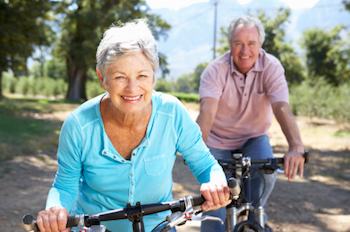
Seniors riding bikes
New research suggests that breast cancer survivors of an older age should follow ongoing exercise programs involving resistance and impact training to build and maintain muscle strength and bone density. This is according to a follow-up study published in The Journal of Cancer Survivorship.

According to the American Cancer Society, there are more than 2.8 million breast cancersurvivors in the US alone. The majority of these women are over the age of 50.

But the team of researchers, led by Jessica Dobek of the Oregon Health and Science University, say it can be challenging for older breast cancer survivors to maintain a healthy body composition after suffering the effects of cancer, treatment for the disease and reduced physical activity.

The investigators explain that treatment for cancer is linked to loss of bone density, a reduction in lean body mass and weight gain.

This means older breast cancer survivors are at higher risk of developing diseases related to obesity, frailty and fractures, and breast cancer recurrence.
Previous study showed benefits of exercise

The researchers previously conducted a study on 106 early stage postmenopausal breast cancer survivors over the age of 50.

The women were randomly assigned to a supervised 1-year resistance and impact program, or a stretching placebo program.

Results of the study revealed that the women who carried out the resistance and impact program had increased muscle strength and reduced loss of bone density, compared with the women in the placebo program.

The investigators wanted to see whether these benefits could be achieved long-term. For their follow-up study, the researchers completed assessments 1 year later on 44 women who were a part of the original study.

The researchers measured their muscle mass, fat mass, upper and lower body strength and the bone mineral density of the hip and spine.
Some ongoing benefits after exercise stopped

All women continued to show improvements in their spine bone mineral density, suggesting that this can be preserved even after regular exercise has ceased, the researchers say.Some of the women in the follow-up study had continued with lower-level exercise, while others had stopped exercise since the previous study.

However, the women's muscle strength declined faster than bone density, indicating that muscle strength must be maintained through continued exercise programs.

"Exercise programs aimed at improving musculoskeletal health should be considered in the long-term care plan for breast cancer survivors," says Dobek, adding:

"Though further work is needed, our results may provide a beginning knowledge about the type, volume and length of exercise training needed to preserve bone health among long-term cancer survivors at risk of fracture."

The researchers say their study is the first to report the long-term effects of supervised exercise programs that have been previously carried out by breast cancer survivors.